

Parquet or veneer parquet? At first glance, you can hardly tell them apart. Both have a top layer of real wood and create a warm, natural look.
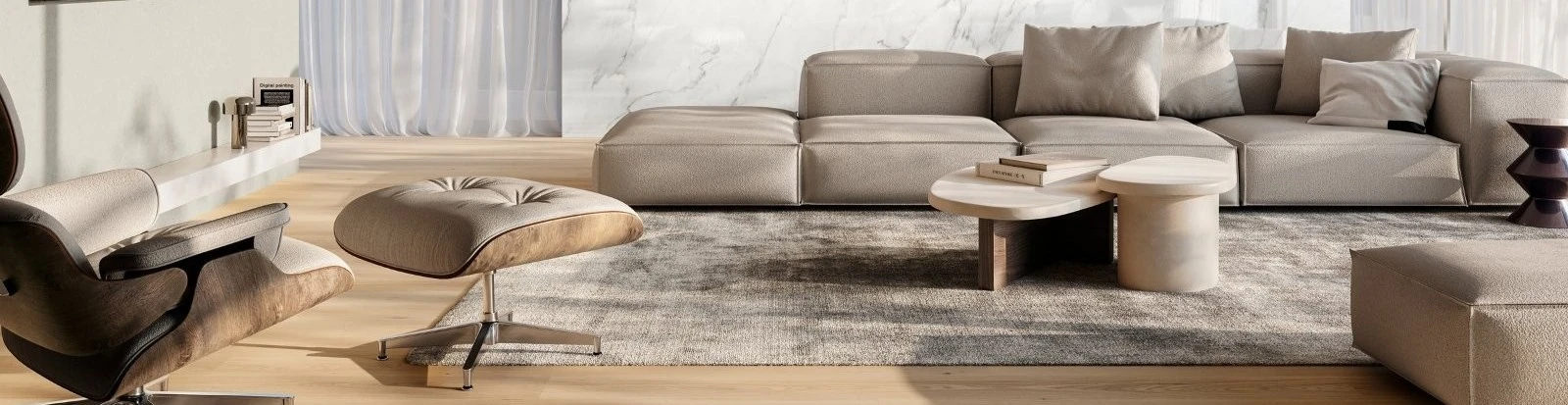
The difference lies mainly in the thickness of that wood layer. With parquet, it is at least 2.5 mm thick, so the floor can be sanded and renovated later on. Veneer parquet has a thinner top layer that can only be lightly sanded once.
On the other hand, veneer parquet is more affordable. Looking for a floor for the long term? Then parquet has the edge. Does your budget play a bigger role, or are you looking for a floor for a shorter period of use? Then veneer parquet is an interesting alternative.
| Parquet | Veneer parquet | |
|---|---|---|
| Top layer | At least 2.5 mm of solid wood | Veneer layer |
| Construction | Solid or multilayer | Veneer layer on a multilayer core |
| Look | Real wood | Real wood |
| Renovation | Can be sanded and refinished | Can be lightly sanded once |
| Price | Available in various price ranges | More affordable than parquet |
| Lifespan | Designed for long-term use | Cannot be renovated if heavily worn |
| Ideal for | Anyone who wants to enjoy the same floor for a long time | Budget-conscious renovations and projects |
Parquet is a real wood floor with a solid wood top layer of at least 2.5 mm.
That thicker wood layer is one of the biggest advantages of parquet: the floor can later be sanded and refinished. Scratches, wear or a dated finish therefore don't automatically mean you have to replace the floor.
Within parquet, we distinguish between solid and multilayer parquet.
With solid parquet, the entire plank is made from a single piece of wood. This creates an authentic wooden floor, but also makes it more sensitive to fluctuations in temperature and humidity. As a result, the wood can expand and shrink more.
Multilayer parquet consists of several layers bonded crosswise on top of each other. On top is a solid wood layer of at least 2.5 mm.
Thanks to this construction, the floor is more stable than solid parquet and reacts less strongly to temperature differences. That is why multilayer parquet is often also suitable for use with underfloor heating.
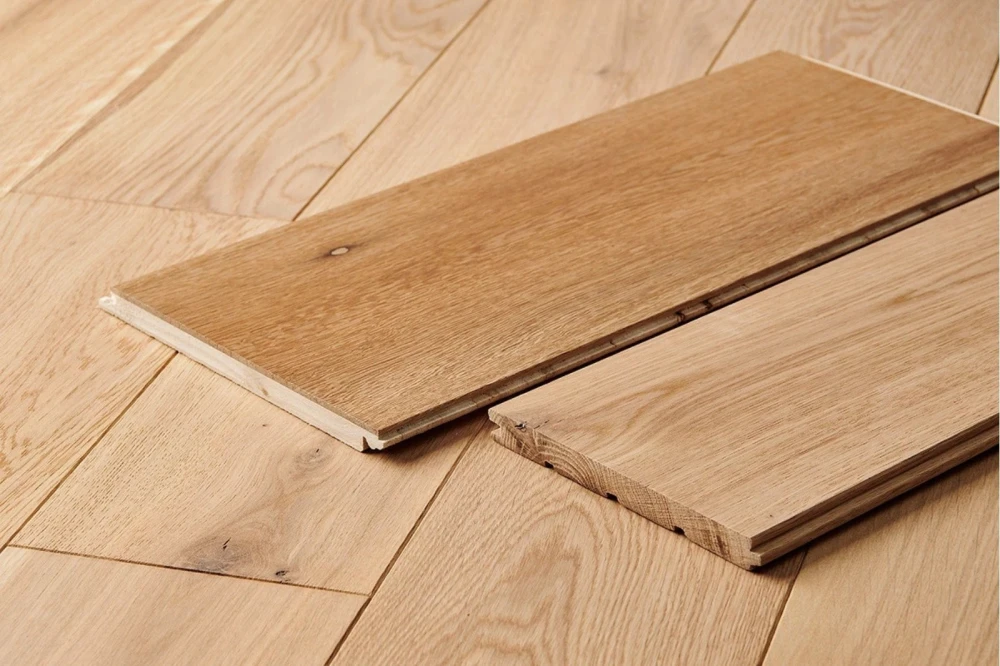
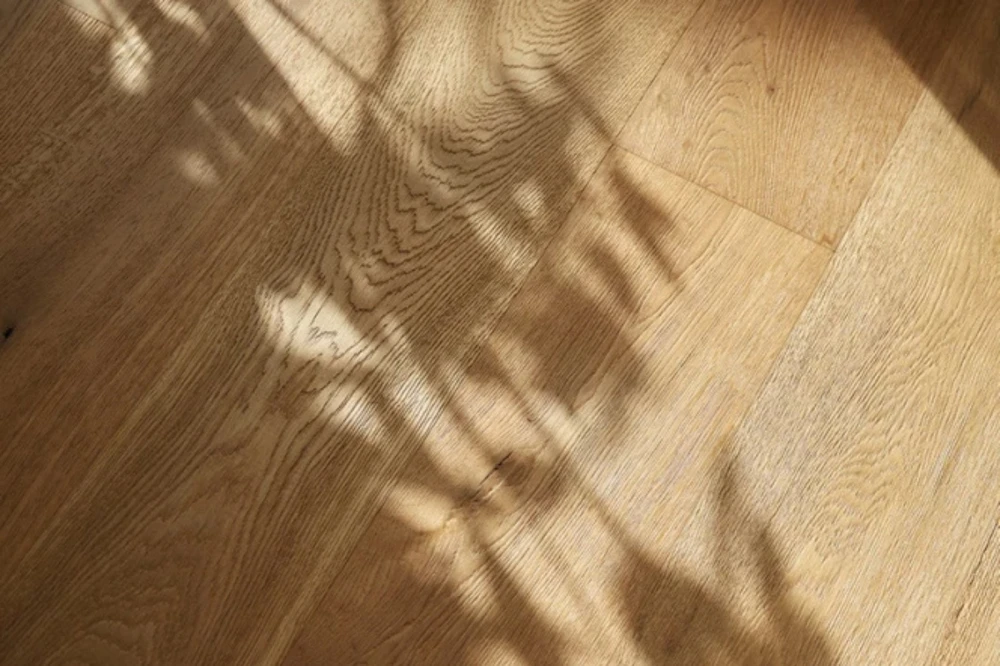
Like parquet, veneer parquet has a visible top layer of real wood. The difference? That wood layer is much thinner.
The veneer layer is glued onto a stable core. Because less solid wood is needed, the price is usually lower than that of traditional parquet.
So you keep the natural look and texture of real wood, but opt for a more budget-friendly alternative.
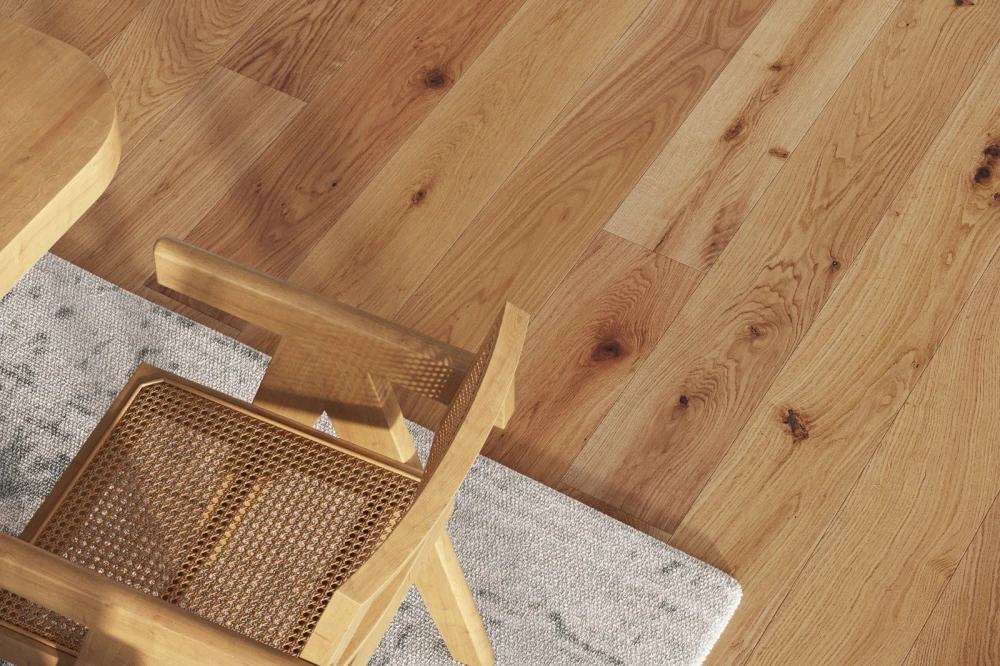
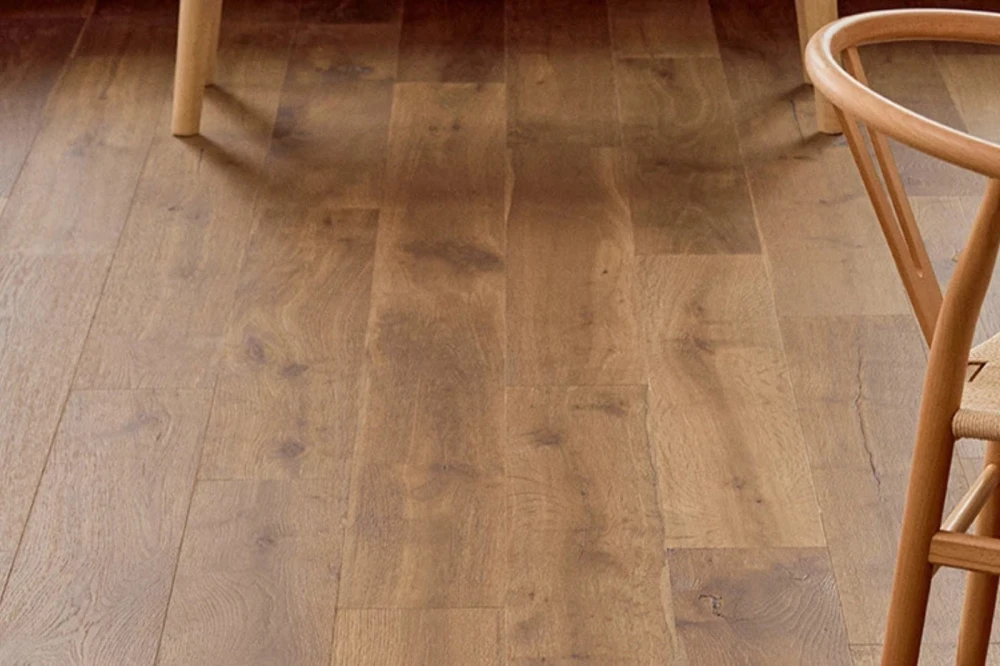
This is where the most important practical difference lies.
Parquet has enough wood in the top layer to be sanded and refinished later on. This means scratches, wear or an old finish can be dealt with again after years.
With veneer parquet, the wood layer is thinner: only a single, light sanding is possible. If that layer is badly damaged or worn, the plank in question, or eventually the entire floor, will have to be replaced.
Veneer parquet is cheaper than parquet. This is mainly because it contains less solid wood.
Do you mainly want the look of real wood on a tighter budget? Then veneer parquet is an interesting choice. Looking for a floor you can keep and renovate in the long term? Then parquet offers more possibilities.
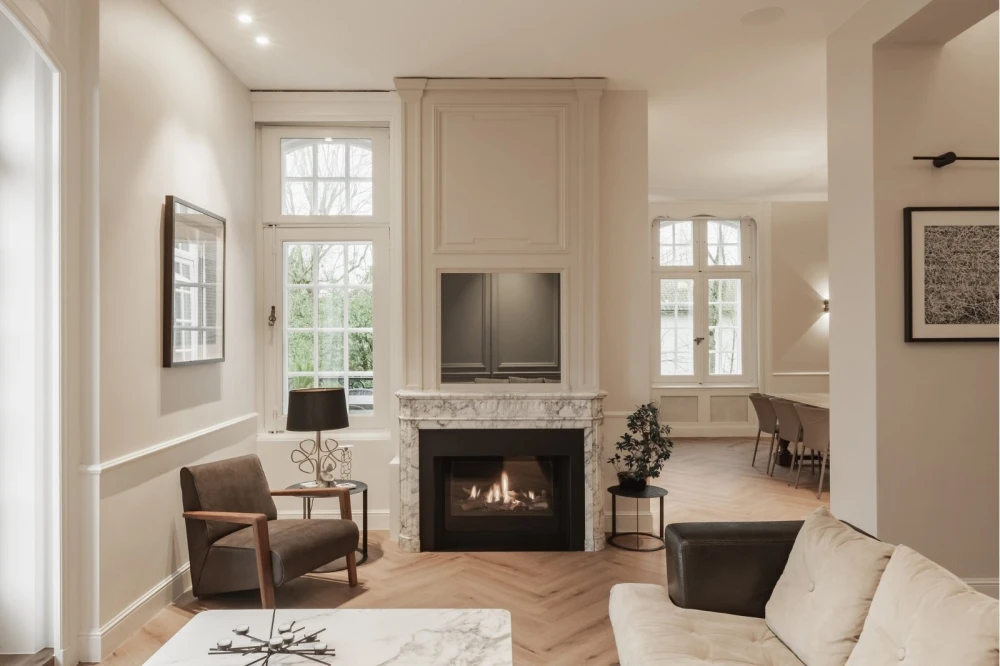
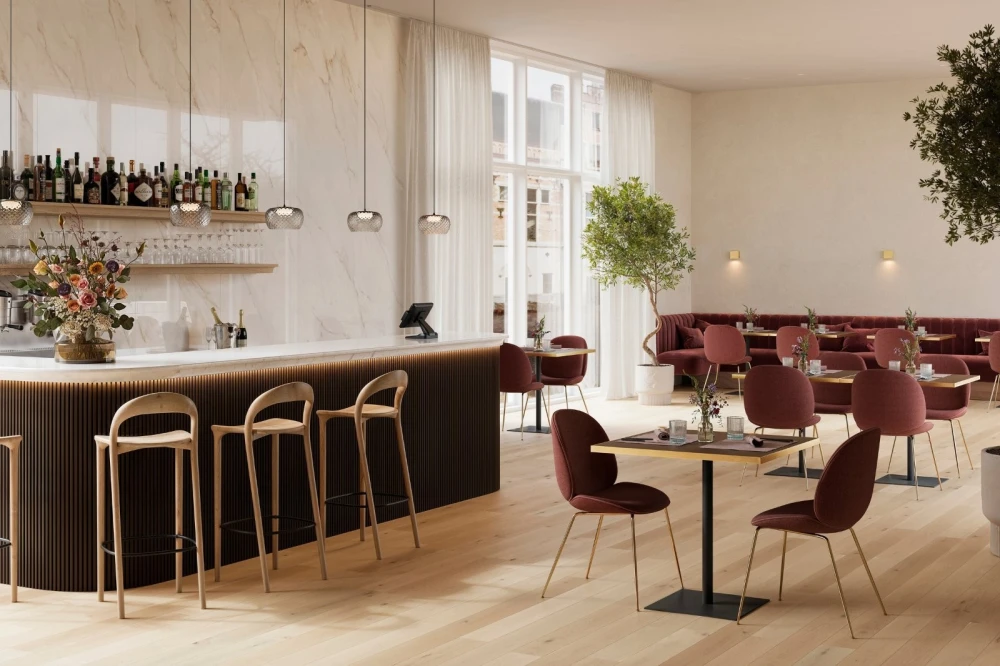
At first glance, hardly. With both floors you're looking at real wood, with natural grain, colour variations and nuances that make every plank unique.
So the difference lies mainly beneath the surface: in the construction, lifespan and renovation options.
Want to compare colours and textures side by side? Order free floor samples and see them in your own interior.
you're looking for a floor for the long term
you want to keep the option of renovating it later
you prefer to repair rather than replace when it wears
you're willing to invest a little more at the time of purchase
your budget plays an important role
you do want the look of real wood
long-term renovation is less important to you
you're looking for a good balance between looks, quality and price
Still in doubt? Get in touch, our experts are happy to help you decide.
Veneer parquet lasts 10 to 20 years on average. Its lifespan mainly depends on how intensively the floor is used and how well you maintain it. Because the wooden top layer is very thin, only a single, light sanding is possible.
Oak parquet can last for several decades. Multilayer parquet often lasts 20 to 40 years, while solid oak parquet can last even longer with proper maintenance. An important advantage is that the wooden top layer can be sanded and refinished. This means that wear after years of use doesn't have to mean the end of the floor.
Oil is particularly interesting if you want to preserve the natural look of oak and make it easier to touch up local damage. Lacquer is more practical if you're mainly looking for a floor that is easy to maintain.
The main difference is the surface. Veneer parquet has a top layer of real wood, whereas laminate has a printed decor layer with a wood look. As a result, every plank of veneer parquet has the natural grain and colour variations of real wood. With laminate, that wood texture is imitated. In terms of how the material looks and feels, veneer parquet is therefore closer to parquet, but it has a thinner wooden top layer that can only be lightly sanded once.
Want to compare parquet and veneer parquet side by side at your leisure? Browse the full range of parquet and veneer floors and discover which colours and textures best suit your interior.
Would you like to see the floor in your own interior before you choose? Order free samples or visit a showroom near you for personal advice.

Want to browse between the different collections and photos? Download our inspiration brochure. Besides all the collections and lots of photos, you will also find all the technical details.
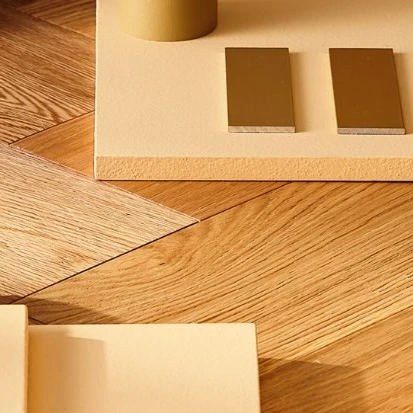
Renovating often means making lots of choices in a short time. Which floor suits your home? Which wall finish goes well with it? And how do you keep your renovation practical, without unnecessary demolition work?

Skirting boards, you either love them or you hate them. So you want them to be as inconspicuous as possible, or you want to turn them into an eye-catcher. Both options are possible!


