

Renovating often means making lots of choices in a short time. Which floor suits your home? Which wall finish goes well with it? And how do you keep your renovation practical, without unnecessary demolition work?
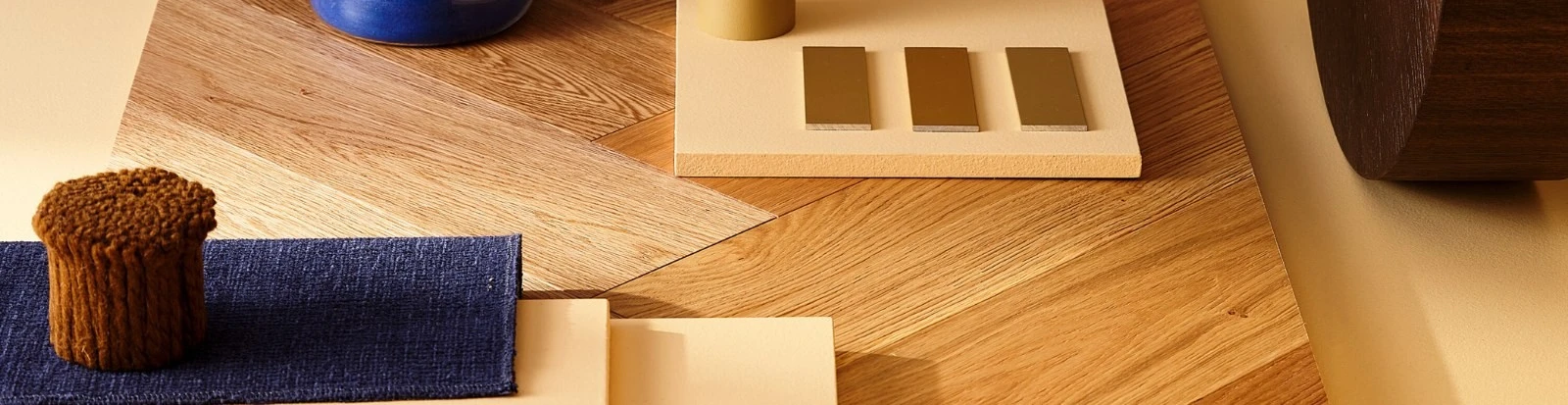
By looking at floor and wall finishes together from the start, you make choices that are not only beautiful but also suit the room and the way you live in it every day. In this blog, we guide you step by step: from the right material to a combination that will feel right for years to come.
When choosing a new floor or wall finish, attention often goes to the look first. Which colour suits your interior? Will you go for wood, stone or another look? And do you want to keep things calm or add a bit more character?
Yet it is at least as important to first look at the room itself and how you use it. In a bathroom, moisture and water resistance play a bigger role, while in a living area, maintenance, durability and comfort may matter more.
So start by thinking about a few practical questions:
Is there a lot of foot traffic in the room?
Will the floor or wall regularly come into contact with water?
Do you want as little maintenance as possible?
Is there an existing floor you would rather keep?
Do you have underfloor heating?
Do you want to install it yourself or leave it to a professional?
Once that is clear, you can look much more specifically at colours, materials and finishes that are not only beautiful but also suit the room.
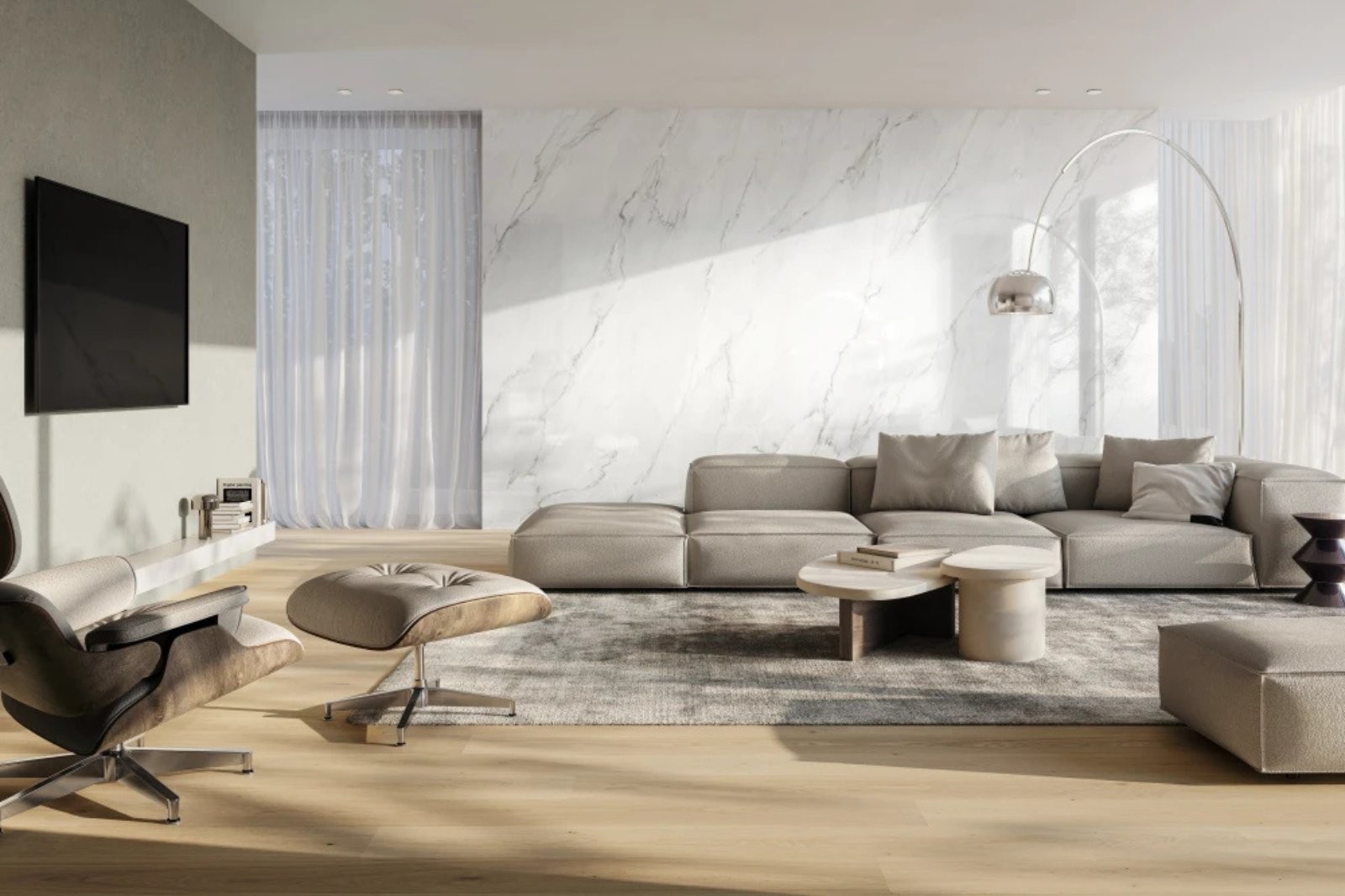
Love the look of wood? There are several ways to bring that atmosphere into your home. You can choose real parquet (solid, multilayer or veneer parquet), a practical floor with a wood look, or a solution that combines real wood with extra ease of use.
Which option suits you best mainly depends on what matters most to you: looks, maintenance, water resistance, installation or build-up height.
If you dream of the natural warmth and character of real wood, you'll soon end up with parquet. Every plank is different, and over the years the floor gains more and more character.
Parquet can also last a long time. Depending on the type of floor, the wood can be sanded and refinished when needed after many years. At Lamett, our wooden floors are made of oak, a wood species that suits both modern and more classic interiors.
Do keep in mind that wood remains a natural product. The right installation and the right maintenance are therefore important.
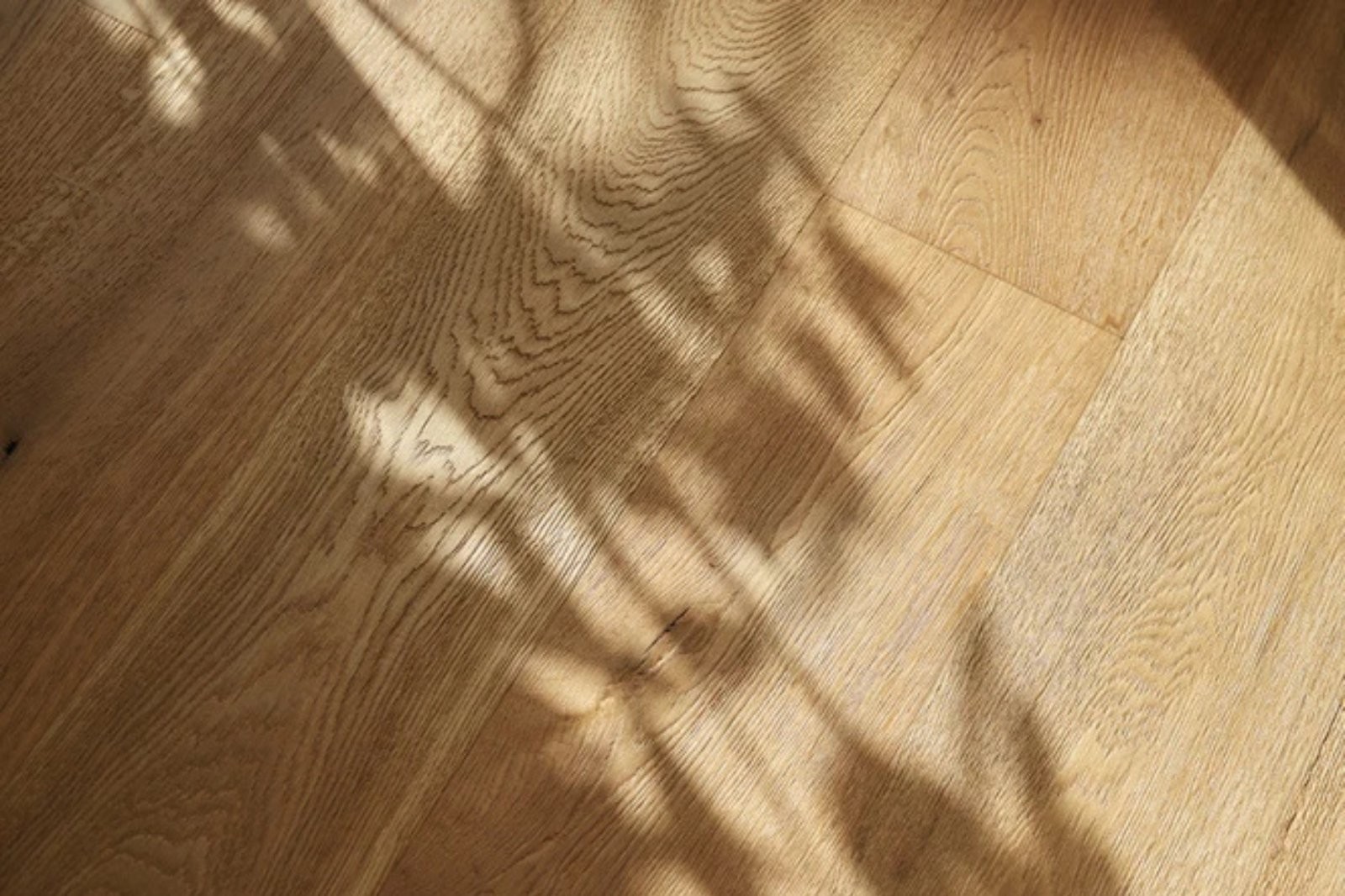
Want the look of wood, but does your floor above all need to withstand the rigours of daily life? Then Parquetvinyl is a perfect alternative. Parquetvinyl combines a realistic wood look with practical ease of use. The floor is water-resistant, stain-resistant and easy to maintain, so it can also be used in rooms such as the kitchen and bathroom. Thanks to the click system, installation is also relatively easy.
Besides planks and herringbone, Parquetvinyl is also available in large tiles.
This makes Parquetvinyl interesting for families with children, households with pets or rooms where you'd rather not have to be careful all the time.
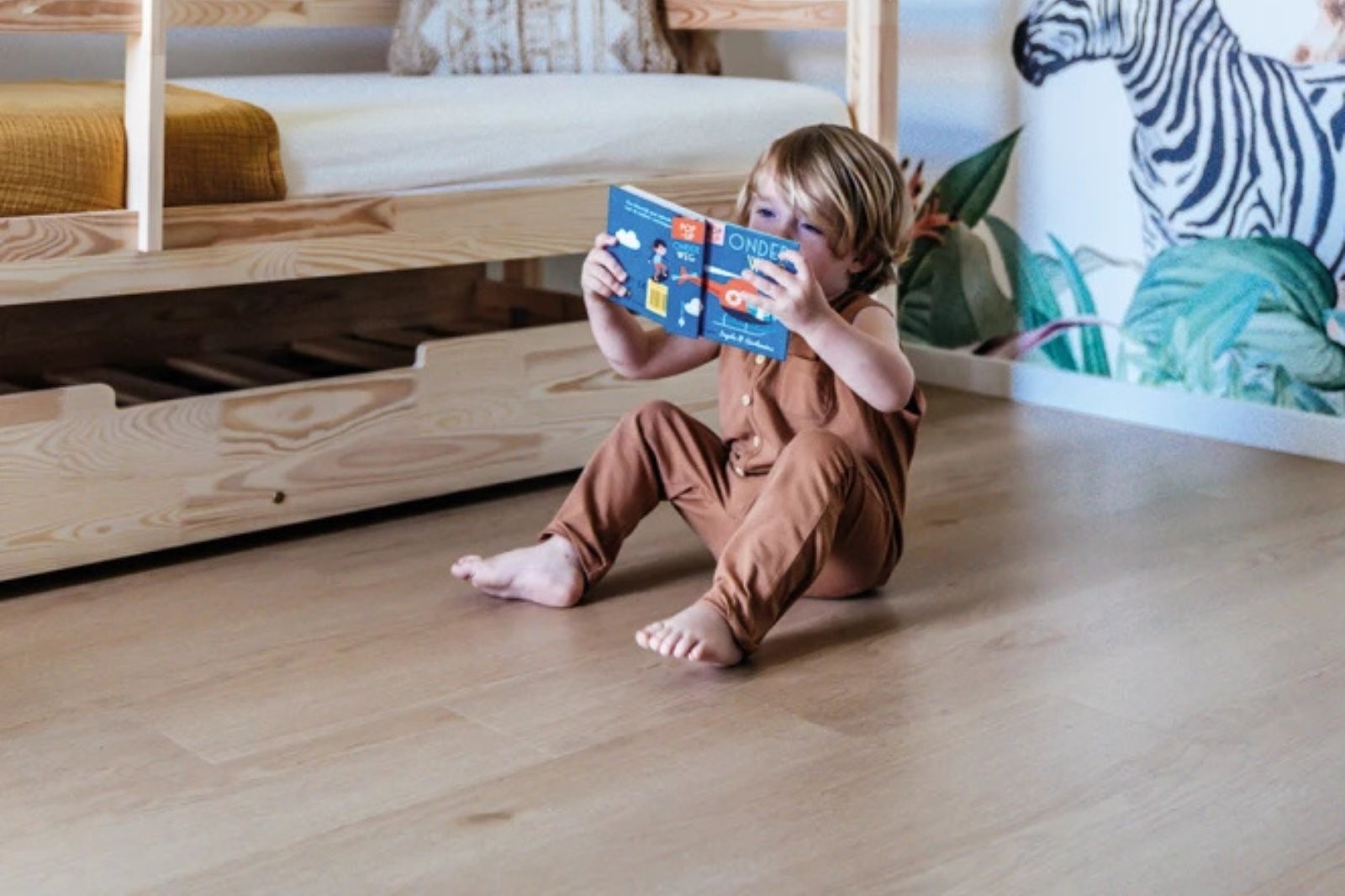
And what if you want to combine the look of real wood with a low build-up height and extra ease of use? Then Wood & Stone is an interesting option.
This floor combines a real oak top layer with a strong SPC core. With a total thickness of just 7 mm and an integrated underlay, it can be installed on top of many existing floors, making it particularly suitable for renovations. The protective finish also makes the floor water-resistant for 24 hours.
This way, you combine the warm feel of real wood with a practical floor that fits perfectly into a renovation project.
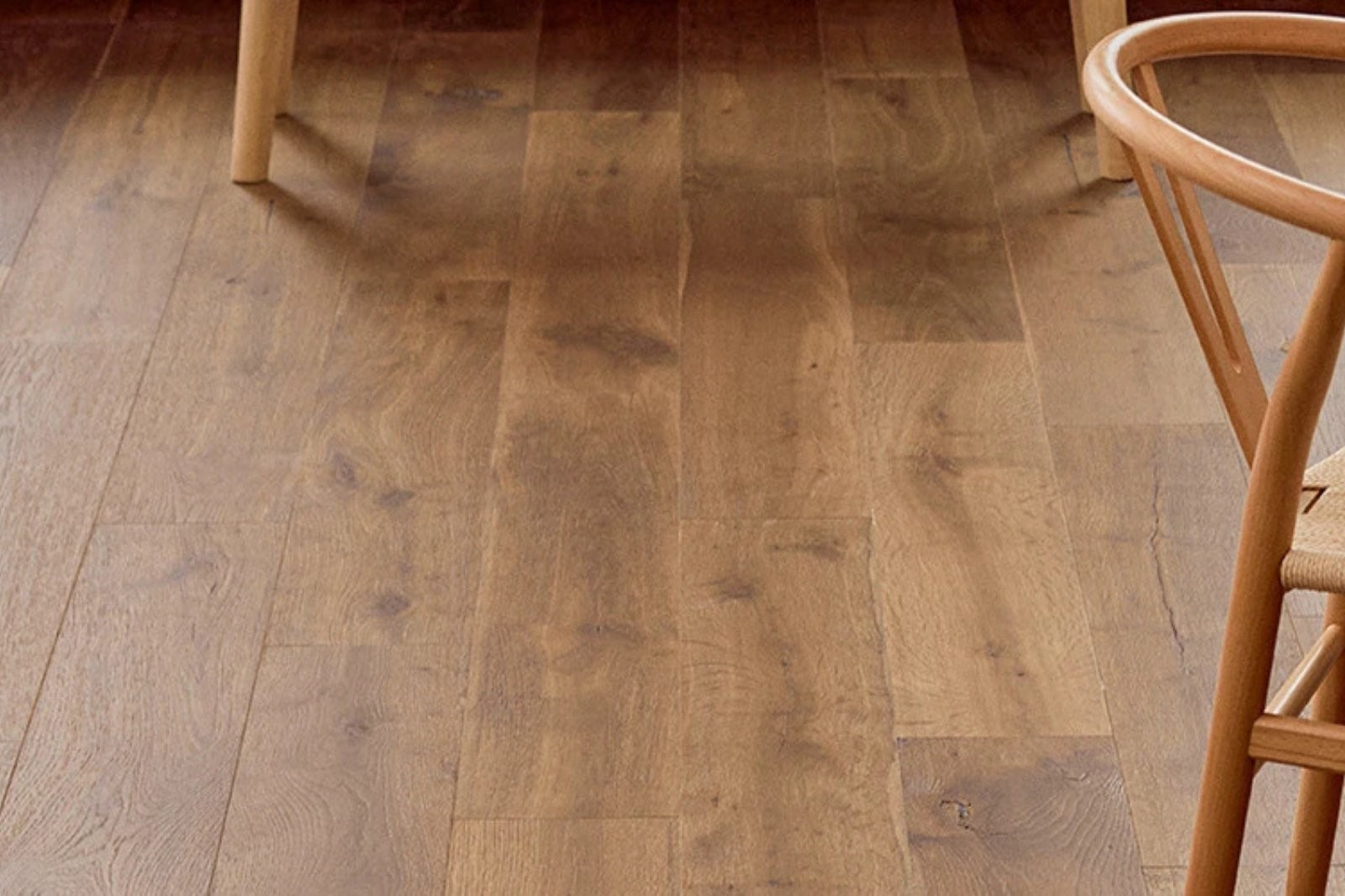
Tearing out an existing floor often brings extra work, dust and waste. Fortunately, that isn't always necessary.
In some cases, a new floor can simply be installed on top of the existing one. This is possible with certain parquet collections and with Parquetvinyl, as long as the subfloor is flat, stable and suitable. With floating installation, the floor is not glued to the subfloor. As a result, installation is often quicker and the renovation stays much cleaner.
One important point: take the total build-up height into account. That way, you can renew your floor without your renovation immediately turning into a major building site.
The floor is literally the foundation of your interior, but it never stands on its own. A dark, striking floor combined with a busy wall can, for example, make a room feel much heavier than expected. A floor with a lot of wood grain, on the other hand, really comes into its own next to a calmer wall finish.
So try not to see floor and wall as two separate choices. Ask yourself what atmosphere you want to create in the room as a whole.
Looking for warmth and calm? Then a natural wood tone goes beautifully with a soft stone look. Want more contrast? Then combine a calm floor with a striking marble look on one wall, for example. Not everything has to match. Above all, it has to work together.
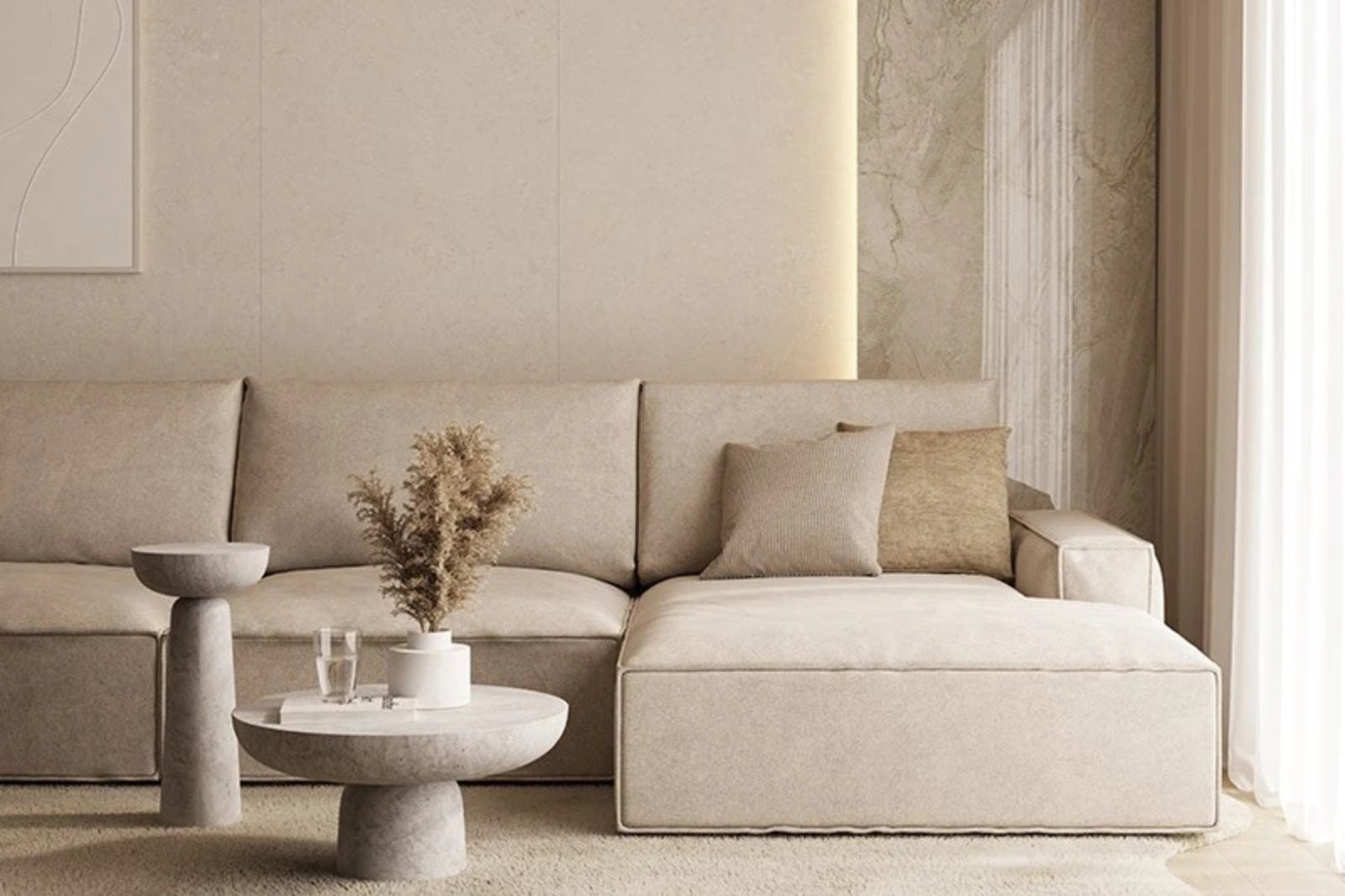
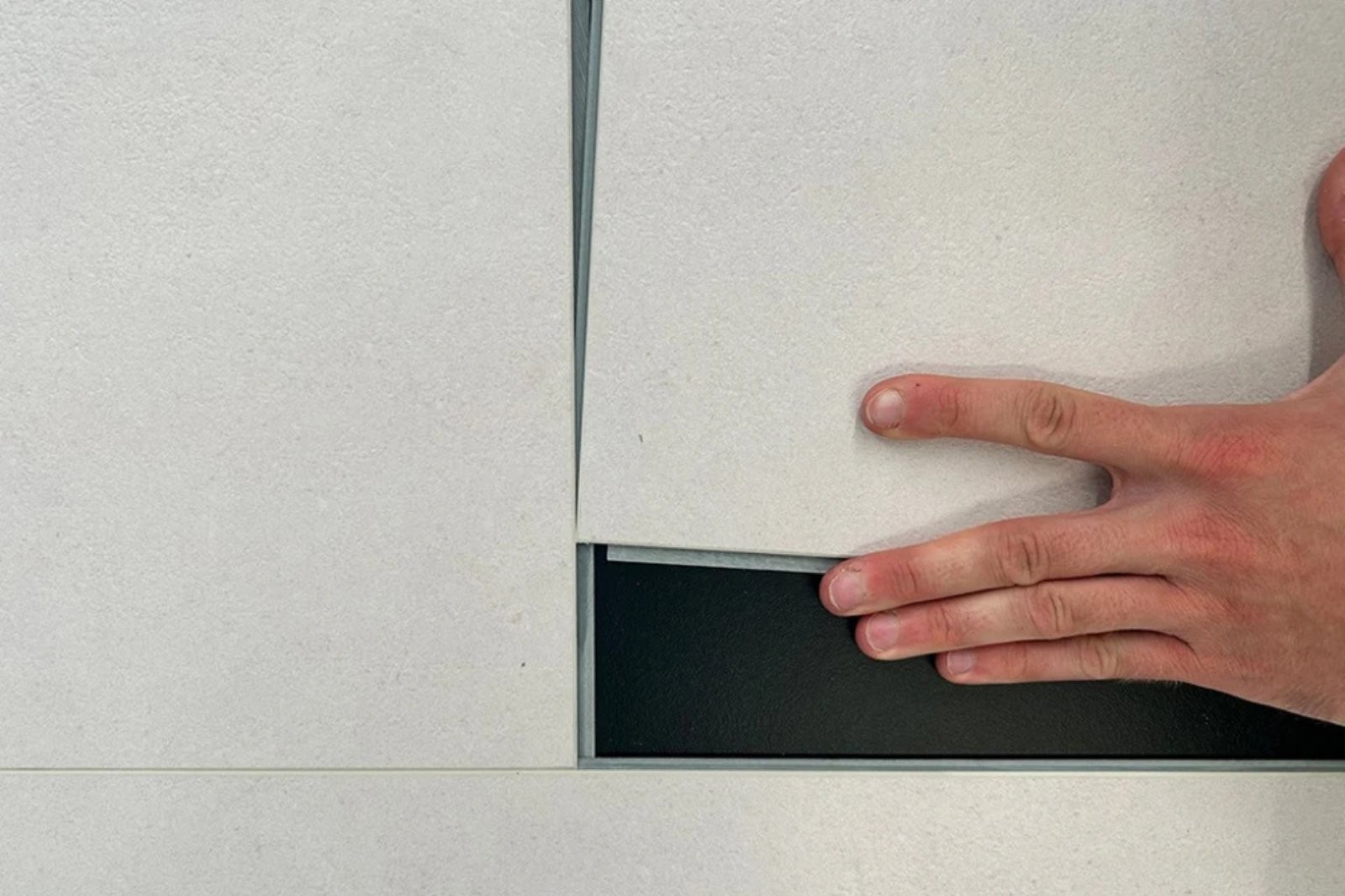
For walls, too, renovating today doesn't automatically mean days of demolition, grinding and dust. Lamett's mineral wall panels are only 4 or 5 mm thick and, if the substrate is suitable, can be glued directly onto an existing wall. So you don't always have to remove the current finish completely before you get started.
Thanks to the tongue-and-groove system, the panels can also be installed quickly and neatly. This makes them particularly interesting for renovations where you want to keep the work and disruption to a minimum.
The panels are also waterproof, scratch- and stain-resistant and suitable for wet rooms. This way, you can repeat the same look and feel in the bathroom, kitchen or living room, for example.
Choosing a floor or wall finish based on a photo alone? Better not. Light has a huge influence on how materials look. A colour that seems fairly neutral in a showroom can look warmer or cooler in your home. The effect can even change throughout the day.
So take samples home with you or order them in advance. Place them in different spots in the room and look at them both in daylight and in artificial light in the evening. Combine different samples with each other straight away. That way, you'll see not only whether you like that one floor, but above all whether the whole picture works.
Also view the samples in the orientation in which they will be installed: place floor samples on the floor and always hold wall samples against the wall where they will go.
A fresh floor and a new wall, without dust, without rubble and without weeks of waiting: it's possible. Browse our parquet collections, discover the possibilities for wall panels or get inspired in a showroom near you.
Do you have any questions about your specific situation? Get in touch with our experts. They are happy to help, from first idea to finished result.

Want to browse between the different collections and photos? Download our inspiration brochure. Besides all the collections and lots of photos, you will also find all the technical details.
Parquet or veneer parquet? At first glance, you can hardly tell them apart. Both have a top layer of real wood and create a warm, natural look.

Skirting boards, you either love them or you hate them. So you want them to be as inconspicuous as possible, or you want to turn them into an eye-catcher. Both options are possible!


